Say “switching costs” to a credit union CEO and watch their jaw tighten.
They’re thinking about the core processor migration that took 18 months and nearly broke the institution. The deconversion fees that made leaving feel like paying ransom. The five-year contract they signed in 2019 because the vendor made switching so painful that staying was the only rational choice, even when the product stopped serving them.
Credit unions are right to be traumatized by switching costs. Jack Henry collected $16 million in deconversion fees in FY2025 alone — the price of freedom for institutions that decided they’d had enough. That’s not a switching cost. That’s a hostage fee. And the entire industry knows it.
So when I say that stateful AI creates switching costs that credit unions should want, I understand the skepticism. But I need you to hold two ideas simultaneously, because the distinction between them is the most important strategic insight in this article:
There is switching cost that exists because a vendor made it expensive to leave. And there is switching cost that exists because you built something so valuable that leaving means abandoning it.
The first is a trap. The second is a moat. And confusing them is how credit unions end up either locked into bad vendors or walking away from compounding assets.
The Core Processor Scar Tissue
Let me acknowledge the trauma directly, because it shapes how every credit union CEO evaluates technology decisions.
I’ve seen this scar tissue up close. When I visited CU*Answers’ data center in Grand Rapids, I stood next to an IBM Power server — a $5 million machine with 75 CPUs — running core processing for hundreds of credit unions. The sheer physical mass of the thing told you everything about the switching cost problem. Decades of institutional data, workflows, and integrations compressed into a machine that takes an entire room. You don’t just “switch” away from that.
Core processor contracts run five to seven years. Deconversion fees — the cost of extracting your data and migrating to a new system — routinely run into the millions. I covered this in Article 11, where I described the structural lock-in that legacy vendors exploit: proprietary data formats, custom integrations that only work with their system, and contractual penalties designed to make the math of leaving always worse than the math of staying.
This is contractual lock-in. The vendor’s value proposition isn’t “our product is so good you’d never want to leave.” It’s “leaving is so expensive you can’t afford to.” The switching cost doesn’t reflect value created. It reflects extraction engineered.
The credit union industry has spent decades living with this model. And it’s produced a perfectly rational response: deep institutional distrust of anything that smells like lock-in. When a vendor says “our platform becomes more valuable over time,” credit union leaders hear “we’re building a cage.”
I understand the reflex. And I’m going to argue that in the context of stateful AI, it’s exactly wrong.
The 20-Year Employee Test
Before we get to technology, consider an analogy that every credit union leader has lived.
I watched this play out at a credit union in Michigan. Their BSA officer had been with them for 22 years. She knew every examiner who’d walked through their doors. She knew that their current examiner cared deeply about SAR narrative quality but was relatively lenient on CTR timeliness. She knew that the landscaping company on Elm Street had deposited cash on Wednesdays for nine years and it was never suspicious. She knew which board members asked detailed compliance questions and which ones trusted her judgment. She knew the three times in the last decade when a real fraud case slipped through initial screening — and what the early warning signs looked like in retrospect.
She was extraordinarily good at her job. And she was planning to retire.
You don’t keep someone like that because of a contract. You keep them because of what they know.
If she left tomorrow, you’d survive. You’d hire someone new. But that new person would spend 12 to 18 months rebuilding the institutional knowledge that your veteran carried. The switching cost is real — measured in months of degraded performance, missed patterns, and examiner relationships that need to be rebuilt from scratch.
Nobody calls that lock-in. Nobody calls it a trap. It’s the natural consequence of accumulated expertise. The switching cost reflects genuine value — value that your institution built over 20 years of investing in a relationship.
Now apply the same logic to AI agents.
Stateless AI Has Zero Switching Cost — and That’s the Problem
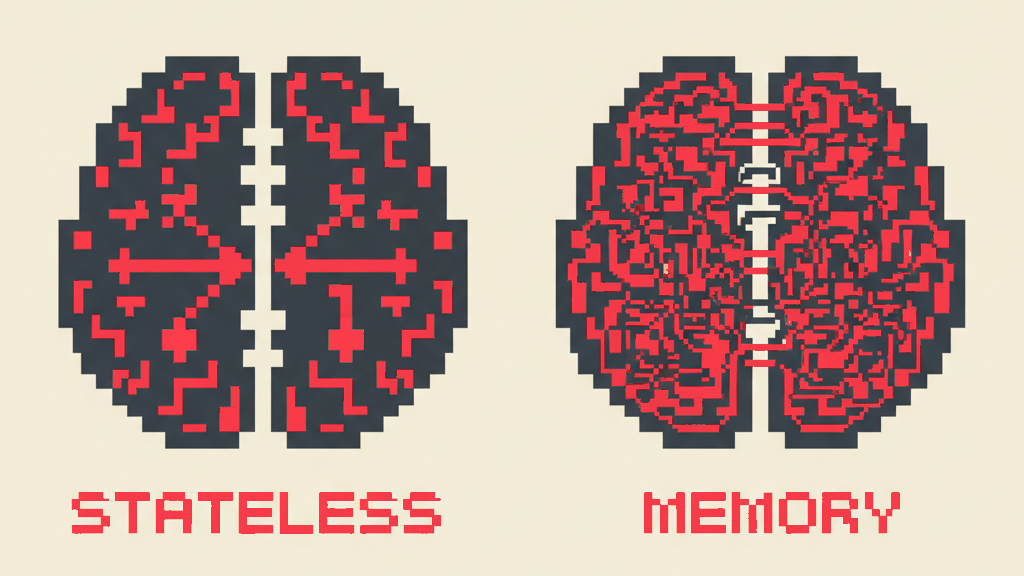
Here’s a truth that most AI vendors won’t say out loud: if switching away from their product is painless, it means their product never learned anything about you.
A chatbot that resets every session? Switch tomorrow. You lose nothing because nothing was accumulated. The tool you used for 18 months knows exactly as much about your institution as the tool you’ll start using next week: zero.
As one VC put it in a viral post that crystallized this perfectly: “The switching cost of a great stateless AI product is zero. The switching cost of a great stateful one, after two years, is enormous — not because of contracts, but because leaving means starting over.”
Zero switching cost sounds like freedom. And for consumer apps, it is. If I switch from one note-taking app to another, the cost is an afternoon of data export.
But for a credit union deploying AI in compliance, lending, and member services, zero switching cost means something darker: your vendor has no incentive to invest in your specific institution. Why would they? You can leave anytime. The rational business strategy for a stateless AI vendor is to build generic capability that serves the broadest market — not deep institutional capability that serves you specifically.
Here’s my contrarian take: this is why most AI chatbots in credit unions feel generic. Because they are. The vendor’s economics reward breadth over depth. Your $50,000 annual contract doesn’t justify custom institutional learning when the vendor can spread that engineering cost across 500 identical deployments.
The result: 58% of credit unions have deployed a chatbot. Satisfaction hovers around 29%. That’s not a technology failure. It’s an architecture failure. The tool was designed to be easy to adopt and easy to abandon — and it performs accordingly.
Earned Lock-In: When Switching Costs Work for You
Now consider the alternative.
Your BSA Runner has operated inside your credit union for 18 months. It has processed over 4,000 alerts. It knows that 94% of alerts from Rule 7 are false positives for your specific membership base. It knows your examiner’s documentation preferences. It formats SAR narratives the way Johnson likes them. It recognized a structuring pattern last quarter that your human analysts hadn’t caught — three members showing coordinated sub-threshold activity — because it had 18 months of your institution’s transaction patterns as context.
Your lending Runner has reviewed 800 applications. I watched a lending team at one credit union partner — 11 loan processors touching five to seven systems per loan, triple manual data entry. The Runner learned from every one of those decisions. It knows your board’s actual risk appetite on commercial real estate — not the policy manual version, but the version expressed through 800 approve/decline/committee decisions. It flags applications that fall outside your historical comfort zone before a human reviews them. It has learned your seasonal lending patterns and adjusts its pre-screening accordingly.
Your compliance Runner has drafted hundreds of documents in your institution’s voice. Not a generic financial services voice. Your voice. The one that says “Hi Sarah” instead of “Dear Member.” The one that explains rate changes with the warmth your membership expects. It took six months of corrections and approvals to learn that voice. Each correction was a deposit. The voice is the compound interest.
Now imagine switching to a different AI platform.
You don’t lose your data — if the architecture is right, your data is portable and you own it completely. I described this ownership model in Article 18: physically separate storage, portable Playbooks, examiner-ready audit trails that belong to your institution.
What you lose is the accumulated intelligence. The 18 months of learned patterns. The examiner preferences absorbed through hundreds of document reviews. The risk appetite calibrated through hundreds of lending decisions. The member communication style refined through thousands of interactions.
Starting over with a new AI platform means your BSA Runner goes back to treating Maria’s flower shop deposits as potentially suspicious. Your lending Runner goes back to generic underwriting assumptions. Your compliance Runner goes back to producing documents that need heavy editing.
The switching cost is real. It’s measured in months of degraded performance — the same months of degraded performance you’d experience replacing that 22-year BSA officer. And crucially: it’s a switching cost that exists because you built something valuable, not because a vendor made leaving expensive.
That distinction is everything.
The Switching Cost Matrix
Not all switching costs are created equal. Let me lay out the spectrum, because credit union leaders need a framework for evaluating which costs are traps and which are assets.
Contractual lock-in (hostile). Multi-year contracts with automatic renewal. Deconversion fees. Proprietary data formats that make export painful. Integrations that only work with the vendor’s ecosystem. This is the core processor model. The switching cost exists to benefit the vendor. It has zero correlation with value delivered. You can hate the product and still be locked in. This is a trap. Reject it.
Technical lock-in (neutral). Custom configurations, API integrations, trained workflows. Switching means rebuilding these — real cost, real time. But the cost is proportional to how deeply you’ve integrated the tool, which is loosely correlated with value received. Most SaaS falls here. Tolerable, but scrutinize the terms.
Knowledge lock-in (valuable). Accumulated institutional intelligence. Learned patterns, calibrated preferences, absorbed operational context. The switching cost exists because the system has become genuinely expert in your institution. You can leave — the data is portable, the Playbooks are yours, there are no deconversion fees. But leaving means restarting the knowledge accumulation from zero. This is a moat you built. Protect it.
The key question for evaluating any AI investment: which category does the switching cost fall into?
If the vendor charges deconversion fees, you’re in Category 1. Run.
If the vendor makes data export difficult or stores your institutional knowledge in formats only their system can read, you’re in Category 1 dressed up as Category 3. Run faster.
If the vendor gives you full data portability, owns no proprietary claim on your accumulated intelligence, charges no exit fees — but the accumulated context makes their system genuinely more valuable than a fresh start — you’re in Category 3. That’s earned lock-in. That’s a switching cost that reflects value you built.
The Ownership Question
This is where Article 18 — “Your Agents, Not Ours” — becomes the crucial companion to this one.
Earned lock-in only works in your favor if you own the accumulated intelligence. If the vendor owns it, then “earned lock-in” is just contractual lock-in wearing a nicer outfit.
I’ve been examined. I’ve sat across from regulators who had the authority to end my business — first at Concreit under SEC oversight, and before that navigating telecom regulation at Flowroute. Operating under that kind of scrutiny teaches you one thing fast: your customers’ data and intelligence must unambiguously belong to them. Not in the marketing copy. In the architecture.
Ask three questions of any AI vendor:
1. If I cancel tomorrow, what do I keep? If the answer is “an export file” — the accumulated intelligence stays with the vendor. Your 18 months of deposits get confiscated. That’s not earned lock-in. That’s an intelligence tax.
2. Can another system use what my agents have learned? If your accumulated knowledge is stored in proprietary model weights that only work inside the vendor’s platform, the switching cost is artificial. If it’s stored in portable formats — structured data, human-readable Playbooks, standard embeddings — the switching cost is earned.
3. Does my accumulated intelligence improve the vendor’s product for other customers? If your BSA patterns, your examiner preferences, your member communication style get folded into a shared model that trains every institution on the platform — you’re not building your moat. You’re building theirs. Your deposits compound in their account, not yours.
At Runline, the architecture answers these questions structurally, not contractually. Physically separate data infrastructure per institution. Playbooks in human-readable YAML that your compliance officer can review and your team controls. No shared model training across institutions. No deconversion fees. No multi-year contracts. We designed the architecture this way because we’ve lived on the other side of the table — as a regulated company ourselves, not just as a vendor selling to one.
The switching cost is purely Category 3: accumulated institutional intelligence that makes your Runners more effective every month. You can leave anytime. You take your data, your Playbooks, and your institutional knowledge with you. What you can’t take — what you’d rebuild from scratch — is the 18 months of compounded learning.
That’s not a trap. That’s compound interest on an investment you made.
Why This Matters for Your Board
Credit union boards have been trained — correctly — to scrutinize vendor lock-in. But the framework they use was built for the core processor era: “Can we leave without paying ransom?” That’s necessary but insufficient in the AI era.
The new question boards need to ask is: “Does this technology get more valuable the longer we use it — and does that value belong to us?”
If yes, you’re building an asset. The switching cost is a feature, not a bug. It means your investment is compounding. Every month of operation makes your AI infrastructure more capable, more attuned to your institution, more valuable to your members. Walking away from that isn’t escaping a trap — it’s abandoning equity.
If no — if the technology delivers the same value on day 500 as day one — you don’t have an AI strategy. You have a subscription. And subscriptions, by definition, create zero compounding value. You’re renting capability at market rate, with no accumulated advantage over the credit union across town that subscribes to the same tool.
The board conversation I’d recommend:
-
Audit your current AI tools. For each one, ask: has this tool gotten measurably better at serving our institution specifically over the last 12 months? Not better in general — better at our compliance patterns, our member communication style, our examiner’s preferences?
-
Classify the switching costs. For each vendor, determine whether the switching cost is contractual (can’t leave), technical (costly to leave), or earned (wouldn’t want to leave). If everything is contractual, you’re captured. If nothing is earned, you’re not investing.
-
Demand data portability as table stakes. Any vendor that won’t guarantee full data portability and zero deconversion fees is telling you that their switching cost strategy is hostile, not earned. Trust accordingly.
-
Recognize that zero switching cost is a red flag, not a feature. If an AI tool would be trivially easy to replace after 18 months, it means the tool learned nothing about your institution in 18 months. Why are you paying for it?
The Paradox Credit Unions Need to Embrace
I’ll close with the paradox, because I think it captures the strategic shift that credit union leaders need to internalize.
The credit union movement was built by people who understood a fundamental truth about value creation: the best investments are the ones that compound. A dollar deposited today is worth more than a dollar deposited tomorrow. A relationship built over decades is worth more than a transaction completed today. An institution that accumulates trust, expertise, and community knowledge over generations creates something that no competitor can replicate by writing a larger check.
AI should work the same way.
The switching costs credit unions have experienced in the core processor era were hostile — designed to capture, not to serve. The industry is right to resent them. But the answer isn’t to demand AI with zero switching costs. The answer is to demand AI where the switching costs reflect genuine value that you built and you own.
When your BSA Runner knows your examiner’s preferences after 18 months of operation, that’s not lock-in. That’s institutional memory.
When your lending Runner calibrates to your board’s actual risk appetite after 800 lending decisions, that’s not a trap. That’s operational intelligence.
When your compliance Runner produces documents in your institution’s voice without a single edit, that’s not vendor capture. That’s the compound interest on 18 months of deposits that you made, into an account that you own.
The question isn’t “can we leave?” You can. Anytime. No fees, no contracts, full data portability.
The question is “why would we?” — and if a vendor’s product can’t make you ask that question after 18 months of use, they haven’t built anything worth keeping.
Sean Hsieh is the Founder & CEO of Runline, the secure agentic platform for credit unions. Previously, he co-founded Flowroute (acquired by Intrado, 2018) and Concreit, an SEC-regulated WealthTech platform managing real securities under dual federal regulatory frameworks.
Next in the series: “The Regulator as Ally” — why NCUA’s AI guidance isn’t a compliance burden but the best design specification you’ll ever get, and how the institutions that read it as a product requirement will build the AI infrastructure that wins.