Kari works in HR at Heartland Credit Union. During my week embedded there, she asked me for something that seemed simple: “I’d like to see all employees age 64 and above by department, by location — so I can know when someone might be getting close to retirement and focus our recruiting efforts.” Four hundred twenty-three employees, and she’s tracking retirement risk manually.
Pull back from Kari’s spreadsheet to the macro picture and the scale of the problem becomes staggering. The U.S. Census Bureau calls it “Peak 65” — 4.1 million Americans turned 65 in 2024, roughly 11,200 per day. It’s the largest retirement wave in American history, and it continues through 2027.
Credit unions feel this acutely. Fifty-two percent of credit union CEOs expect to retire within six years, with an average age of 66. Leadership searches for lending, compliance, and technology roles now run 10% longer than other C-suite searches because the talent pool is evaporating. Forty-six percent of credit unions cite recruitment and retention as their top concern.
The question isn’t “will AI replace your people?” It’s “what happens to everything your people know when they walk out the door?”
The Knowledge That Lives in People, Not Systems
Most of what makes your credit union work isn’t in any system. It’s in your people’s heads.
Industry research consistently estimates that 80% or more of organizational knowledge is undocumented — it lives in habits, relationships, workarounds, and judgment calls that never make it into an SOP. Dorothy Leonard at Harvard Business School calls this “deep smarts” — business-critical, experience-based knowledge that, as she puts it, “cannot be wholly captured or transferred in any text or oral form.” The people who have deep smarts can see the whole picture and yet zoom in on a specific problem others haven’t been able to diagnose. Almost intuitively, they make the right decision, at the right level, with the right people.
The cost of losing a senior employee isn’t just recruitment. It’s the institutional context that walks out with them: vendor relationships, examiner preferences, member history, the “we tried that in 2014 and here’s why it failed” wisdom that prevents your organization from repeating expensive mistakes.
NASA learned this the hard way. After the Apollo program wound down, engineers retired and programs were cut. Decades later, when NASA’s Orion team needed to reference engineering documents from the Apollo capsule’s uprighting system, the enterprise search at Johnson Space Center returned zero results. The team spent months asking retired engineers and NASA’s history officer — with no luck. When a pilot knowledge management system was finally deployed, it surfaced 200 relevant documents within three hours. David Meza, NASA’s Chief Knowledge Architect, said the engineer told him “it saved him a couple years and a couple million dollars.” NASA hadn’t lost the blueprints. They’d lost the people who knew what the blueprints meant.
The Boeing 737 MAX tragedy carries the same lesson in sharper relief. When Boeing moved production away from experienced Puget Sound engineers and outsourced key design work, the institutional knowledge that would have caught the MCAS design flaws wasn’t in the documentation. It was in the heads of engineers who’d been building planes for decades. That knowledge gap contributed to 346 deaths. I referenced Boeing in Article 8 as a control failure — it’s equally a knowledge failure.
Your credit union version is less dramatic but no less consequential. Your BSA officer who’s been there 22 years doesn’t just know the regulations — she knows which examiner asks which follow-up questions, which member patterns are genuinely suspicious versus just unusual, which documentation format survives an audit without a single finding. That’s not in your compliance manual. And when she retires, it’s gone.
During my week at Heartland, I watched this firsthand. “A lot of really cool, interesting things built internally here,” I noted. “The method and how work is getting done has been influenced by multiple generations of tools and systems.” Every workaround, every custom spreadsheet, every “we do it this way because” — that’s institutional knowledge encoded in behavior, not documentation. And it’s walking out the door 11,200 people at a time.
The Staffing Crisis Is a Knowledge Crisis
Credit unions don’t have a headcount problem. They have a capacity problem that becomes a knowledge problem.
The numbers paint a bleak picture. Three hundred forty-seven thousand total credit union employees, supporting $35.7 billion in annual compensation. Twenty percent annual turnover across all asset sizes — and for member service representatives, where the work is most repetitive, turnover runs 30-40%. Sixty-five percent of credit unions report that talent gaps are already limiting their ability to meet organizational goals.
The compliance burden makes it worse. Compliance FTE hours grew 61% since 2016, while total FTE hours grew only 20%. C-suite time spent on compliance: 42%, up from 24%. Your leaders are drowning in compliance overhead, leaving no bandwidth for strategy, mentorship, or the innovation that keeps a credit union competitive.
The vicious cycle is predictable: experienced people leave, knowledge gaps appear, remaining staff work harder, burnout increases, more people leave, more knowledge gaps. One credit union compliance officer told me the team was “always one resignation away from crisis — you can’t hire BSA officers fast enough.”
And the salary competition is structural. A BSA analyst at a $500 million credit union makes $60,000-$80,000. The same analyst at a regional bank makes $80,000-$110,000. At a money center bank or fintech: $120,000 or more. You’re fighting for scarce talent against institutions that can simply pay more.
As I said at Heartland: “If you guys are barely keeping your head above water today, it’s really tough to think about experimentation, getting creative.” AI doesn’t break this cycle by replacing people. It breaks it by giving people breathing room.
AI as Institutional Memory
Most credit union leaders think about AI as “doing tasks faster.” The real unlock is something more fundamental: AI as institutional memory — capturing the judgment, context, and accumulated wisdom of your most experienced people and making it available to everyone.
The concept is a “digital twin of expertise.” Your retiring BSA officer spends six months working alongside an AI agent. The agent learns her patterns — which alerts she dismisses immediately, which ones she escalates, how she structures SAR narratives, what documentation format she’s found survives examiner scrutiny. When she retires, the new hire doesn’t start from zero. They start with a co-pilot that embodies 22 years of institutional knowledge.
The research validates this at scale. Erik Brynjolfsson, Danielle Li, and Lindsey Raymond at Stanford and MIT studied 5,179 customer support agents at a Fortune 500 company using an AI assistant. The headline finding: AI increased productivity by 14% overall. But the real insight was underneath — novice agents improved by 34%. Workers with two months of tenure plus AI performed as well as workers with six months of tenure without AI.
Read that again. AI compressed the experience curve by four months. It didn’t replace expertise. It transferred expertise — the pattern recognition of top performers became accessible to new hires from day one. The AI learned what the best agents did and nudged everyone toward those behaviors.
This is the knowledge preservation argument made concrete. When your best BSA analyst’s judgment is captured in an AI agent, every new analyst who joins your team starts with the benefit of her 22 years of experience. Not a transcript of what she said — a model of how she thinks.
At one CUSO, I watched 12 employees processing daily cash transactions. Eighty percent of the tracker note content followed standardizable templates — but the other 20% was pure judgment, the kind of contextual assessment that only comes from years of watching the same membership’s patterns. The AI handles the 80%. The human focuses on the 20% that actually requires expertise. The knowledge embedded in that 20% — that’s what gets preserved.
This is the difference between a tool and a team member. A tool does what you ask. A team member notices patterns, suggests improvements, and makes the organization better over time.
The Centaur Model for Credit Unions
I introduced Kasparov’s centaur chess in Article 8, but the implication for credit union staffing deserves its own treatment.
When ATMs were introduced in the 1970s, everyone predicted bank teller jobs would disappear. The opposite happened. Between 1970 and 2010, ATM deployment grew from zero to 400,000 machines — and bank teller employment grew from roughly 300,000 to 600,000. Tellers per branch dropped from 20 to about 13, but ATMs reduced branch operating costs so dramatically that banks opened 43% more urban branches. The technology didn’t eliminate the job. It elevated it. Tellers evolved from cash handlers to relationship managers, selling high-margin financial products and serving small business customers whose needs no machine could address.
This is exactly the pattern credit unions should expect — and design for.
Your loan officer doesn’t get replaced by AI. Your loan officer gets freed from data entry and document chasing so they can spend more time talking to members, understanding their financial situations, and making the judgment calls that build lifelong relationships. Your BSA analyst doesn’t get replaced. She spends her time on the 5% of alerts that require real investigative instinct instead of the 95% that turn out to be Maria the florist. Your HR coordinator doesn’t get replaced. She focuses on employee relationships and workforce development instead of generating employment verification letters.
The Harvard/BCG study I cited in Article 8 showed AI made consultants 12.2% more productive, 25.1% faster, and 40% higher quality. But the researchers also found that consultants who strategically divided work between human and AI — the centaurs — maintained their critical thinking edge. Those who fully delegated to AI — the cyborgs — showed diminished judgment over time. How you integrate AI matters as much as whether you integrate it.
The World Economic Forum’s 2025 Future of Jobs Report projects AI will create 170 million new jobs globally while displacing 92 million — a net gain of 78 million positions. But the nature of work changes. The roles that grow are the ones that combine human judgment with AI capability. Credit unions — built on “people helping people” — are structurally positioned for exactly this.
Headcount Is Sacred — Design Your AI Strategy Around It
Here’s the design constraint that makes credit union AI deployment fundamentally different from enterprise AI: headcount is sacred at institutions with 30 to 200 employees.
This isn’t a limitation. It’s a design principle that produces better AI deployments. When you can’t fire anyone — when your mission is people helping people and your 50-person team is a community institution, not a cost center — you’re forced to build AI that genuinely amplifies rather than replaces.
Each Runline Runner delivers two to three FTEs in annual capacity, with potential to scale further. But the metric isn’t “FTEs replaced.” It’s “capacity unlocked.” Your 50-person credit union operates at the capability of a 150-person institution. Same people, dramatically more impact.
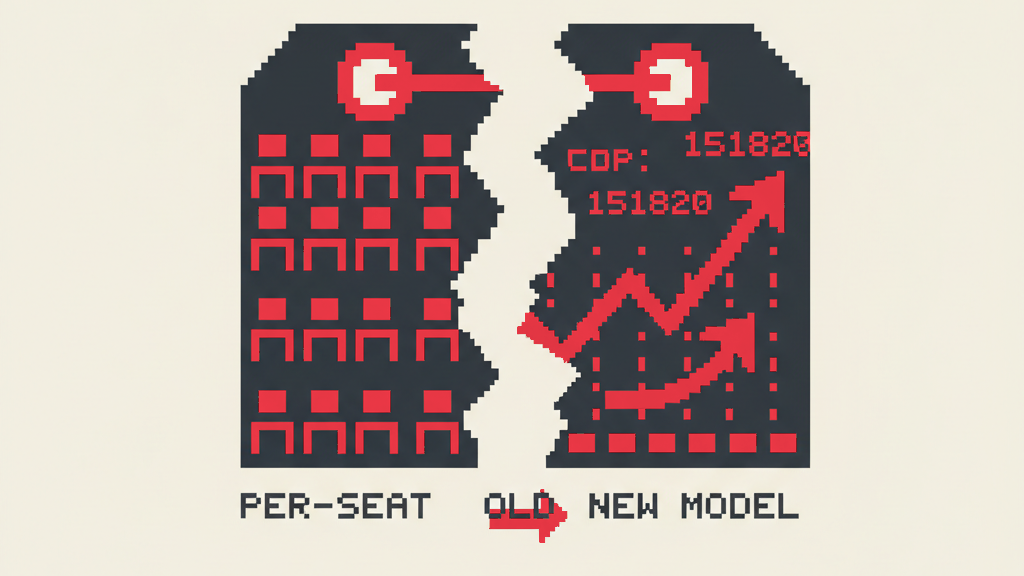
The pricing model reflects this philosophy. Runner-based, not per-seat — each Runner priced by the complexity and workflows it handles, evolving toward true outcome-based pricing as the industry matures. When the incentive structure is aligned with amplification rather than elimination, the AI vendor’s success is measured by your team’s expanded capability — not by how many positions you cut.
Domain experts become orchestrators. Your BSA officer doesn’t learn to code — she directs AI agents in business language, refining their behavior based on 20 years of credit judgment. Your lending manager doesn’t become a data scientist — he reviews AI-drafted recommendations and applies the institutional context that no algorithm can replicate. The human doesn’t just supervise the AI. The human is the point. The AI is the amplifier.
The Cooperative Advantage in a People Strategy
Circle back to Kari at Heartland. She doesn’t need a retirement planning report. She needs a system that captures what retiring employees know before they leave, accelerates new hires to competency, and gives every team member the capacity to do the work they actually love.
Cooperative Principle #5 is Education, Training, and Information — credit unions have always invested in their people. AI amplification isn’t a departure from that principle. It’s its highest expression.
One of the things that stayed with me from my week at Heartland was the passion the employees had — the eagerness to have more capacity to do more, but the genuine love they have for the positions they’re in. AI doesn’t threaten that love. It gives it room to breathe.
Your core processor is a time capsule of data — the subject of Article 5. Your experienced staff are time capsules of context — the subject of Article 9. Both need to be unlocked before they’re lost. And the AI that preserves what your people know, accelerates what your new hires can do, and amplifies what your entire team delivers — that’s not a technology investment. It’s a people investment that happens to use technology.
The credit unions that win the next decade won’t be the ones that deployed the most AI. They’ll be the ones that used AI to build the most capable, most knowledgeable, most empowered human teams. Because at the end of the day, credit unions aren’t technology companies. They’re people companies that happen to use technology. AI should make that more true, not less.
Sean Hsieh is the Founder & CEO of Runline, the secure agentic platform for credit unions. Previously, he co-founded Flowroute (acquired by Intrado, 2018) and Concreit, an SEC-regulated WealthTech platform managing real securities under dual federal regulatory frameworks.
Next in the series: “Outcome-Based Pricing and the End of the Per-Seat Model” — why charging per seat made sense in a world of human labor, and why charging per outcome fundamentally changes the economics of credit union technology.